2026
Guelph, Ontario · available for advisory work, speaking, and collaboration
Anirban Kanjilal
Solutions Architect · Cloud · Security · AI · Quantum
I build the AI platforms, cloud architecture, and security that run in production, with a research track in quantum.
I am a systems architect first. My foundation is more than twenty years of designing and engineering high-volume, resilient platforms for regulated industries such as payments, where downtime and data loss are unacceptable. That depth in system architecture and platform engineering is what I bring to every engagement, whether the workload is a payments switch, a cloud migration, or an AI platform.
Today, much of my work is helping organizations take artificial intelligence from proof of concept to regulated, always-on production. That work rests on the same fundamentals: sound cloud architecture, disciplined platform engineering, and security built in from the start. The model is rarely the difficult part. The difficulty is meeting the security, cost, resilience, and service level commitments that production demands.
My quantum work covers quantum machine learning, quantum algorithms, materials for quantum sensors, and post-quantum cryptography. The last of these is the most immediate, because the public-key algorithms protecting payments today must be migrated to the standards NIST finalized in 2024 before a large quantum computer can break them.
Focus
01
Machine learning in production
02
Quantum on Amazon Braket
03
Artificial intelligence security
04
Cloud and AI cost engineering
05
Agentic systems
Selected work
enterprise-ai-archlive demo
A complete nine-layer enterprise AI architecture that deploys into a real AWS account with a single action. One governed request passes through all twelve hops, reaching the model at step seven, after which the environment is torn down automatically. It uses retrieval on S3 Vectors, Bedrock Guardrails that stop a poisoned document at the retrieval boundary, a Cedar validation checkpoint, and an immutable audit record for every run.
gha-ecs-runnerlive demo
Self-hosted GitHub Actions runners on ECS Fargate that build container images privately and push them to Amazon ECR. The registry is locked so that only the runner can push, and every image is signed within the account. Each task runs a single job, produces one artifact, and is then destroyed. The repository includes the full Terraform, the runner image, and the control plane.
llm-security-lablive demo
A working demonstration of prompt injection rather than a written description of it. It provides vulnerable and hardened versions of common language model risks, each mapped to the OWASP Top 10 for Large Language Model Applications, MITRE ATLAS, and the NIST framework. It runs entirely offline and requires no API keys.
quantum-on-braketlive
Quantum algorithms that run on Amazon Braket and are written with cost in mind. They run for free on the local simulator and can be pointed at real hardware with a single flag, and a spending guard runs before every call to a quantum processor. Grover's algorithm is available now, and an optimization algorithm is next.
Run it
ai-finops-agentlive demo
An agent that reads billing data in the open FOCUS format and shows where cloud and model spending goes, from idle accelerators to sudden increases in usage. The agent itself is hardened against prompt injection.
llm-cost-guardrailslive demo
A circuit breaker for language model spending. This provider-neutral middleware meters every call and rejects any request that would exceed budget, using per-tenant budgets, rate limits, and a spending kill switch. It runs offline and requires no API keys.
mcp-secure-gatewaylive demo
A hardened gateway that sits in front of Model Context Protocol tools. It authenticates the caller, enforces a default-deny tool allow list, validates input, and treats tool output as untrusted data, so that a confused deputy attack is blocked at the boundary. The audit log records every decision.
agent-eval-harnesslive demo
Unit tests for agent behavior. This framework-neutral harness verifies that an agent calls the correct tool, refuses an attack, does not leak secrets, and stays within a token and cost ceiling. It then gates deployment on those results, in the same way a test suite gates a release.
On the roadmap
agentic-patterns
reference-architectures
Reference architectures
EKS payments platformpayments
A multi-region, active-active Amazon EKS design for a critical payments platform. It uses a cell-based synchronous ledger to prevent data loss across two Canadian regions, aligns with PCI requirements, and includes the full detailed design in Terraform, Kubernetes, and CI/CD.
Read the architecture
Secure landing zonefoundation
The governed foundation that every other workload is deployed into. It is a multi-account, two-region organization built on AWS Cloud WAN, with service insertion, layered guardrails, and centralized inspection.
Read the architecture
Zero trust AI gatewayAI security
A single control point between agents and the models and tools they call. It provides scoped identity, an allow-listed tool registry, request and response validation, and a complete audit trail.
Read the architecture
Managed GHA runners on ECSdelivery
Self-hosted GitHub Actions runners implemented as ephemeral Fargate tasks. They build images without a daemon, sign them in the account with KMS, and push to ECR. The registry is locked so that the runner is the only writer, and each task runs a single job, produces one artifact, and is then destroyed.
Secure RAG platformRAG
Private data grounding that never leaves the network. It provides managed retrieval and reranking, guardrails for prompt attacks and personal data, and continuous evaluation.
Read the architecture
Resilient transaction corepayments
An idempotent, event-driven backbone for high-value transactions. It is designed against all six Well-Architected pillars and uses the saga pattern together with multi-region failover.
Read the architecture
Model lifecycle governanceMLOps
Training, registration, approval, deployment, and monitoring in one governed pipeline on SageMaker. It includes bias and explainability checks, drift detection, and the evidence trail that auditors require.
Read the architecture
Build and deploy pipelinedelivery
A single pipeline on GitHub Actions that takes a commit to production. It performs static and dynamic analysis, dependency and image scanning, signing and provenance, and keyless promotion across accounts. Releases are guarded, using GitOps for Kubernetes and blue-green deployment for the container service.
Read the architecture
My hobby projects
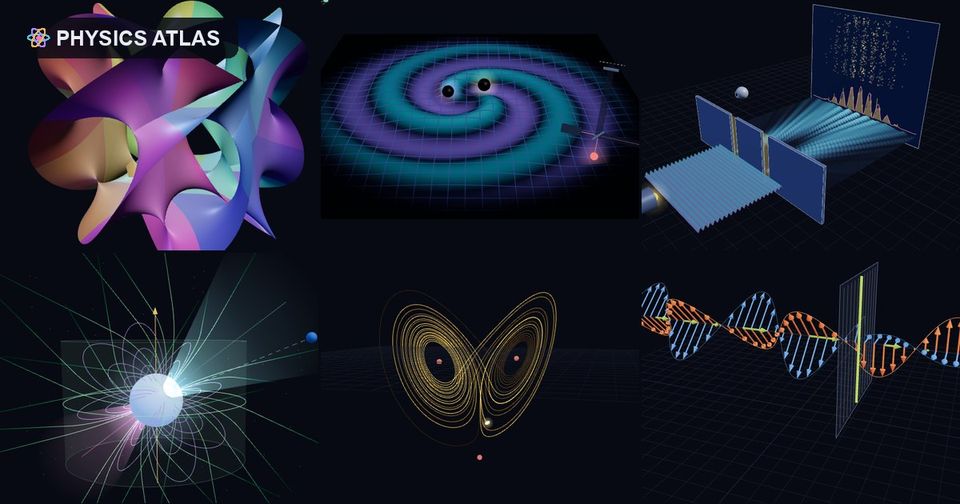
Physics Atlas3D · physics
98 interactive 3D simulations of the hardest ideas in physics, from chaos and black holes to quantum fields and the Big Bang.
Visit the site ↗

Beneath3D · geoscience
Rotate the Earth, peel back the surface, and see what lies beneath any point on the planet.
Visit the site ↗
Background
Experience
Leader, DevSecOps & Cloud Engineering
Interac · 2024 to present · 99.99% uptime, deploys from days to minutes
Principal Architect
Interac · 2022 to 2024 · security and resiliency for critical payments
Senior / Technical Architect
Interac · 2018 to 2022 · zero downtime prominent payments platform
Lead Architect
Wipro · 2017 to 2018 · $10M+ data center consolidation, 13 into 2
Earlier
Wipro / TCS · 2003 to 2017 · global cloud and data center transformations
Education
Master of Interdisciplinary Artificial Intelligence
University of Ottawa · in progress
Master of Business Administration in Information Technology
United Business Institutes, Brussels
Bachelor of Technology in Computer Science
Calcutta University
Credentials
Amazon Web Services Solutions Architect
certified in cloud architecture
TOGAF 9
enterprise architecture
Oracle Cloud Architect
design across multiple clouds
Quantum computing since 2003
published, and now working hands-on with Braket
Publications
Selected articles and papers in quantum computing and machine learning.

2026

2026
Materials Science Frontiers for Quantum Memory: A Comparative Analysis Across Leading Platforms

Preprint · Zenodo · with Richik Chongdar
2026

2004
Quantum Cryptography, A Review
International Conference on Emerging Technology, ICET 2004 · Bhubaneswar, pp. 118 to 123 · with Dr. Bijoy Talukdar
2004
Towards Building a Quantum Computer
TCS First Technical Architect Conference · Hyderabad · with Dr. Bijoy Talukdar
2003
From Babbage to Von Neumann, But Feynman to What?
Richard Philip Feynman Memorial Seminar, IEE · Kolkata, pp. 8 to 11 · with Dr. Bijoy Talukdar